
FAQ

Where asbestos can be found in a New Zealand residential house
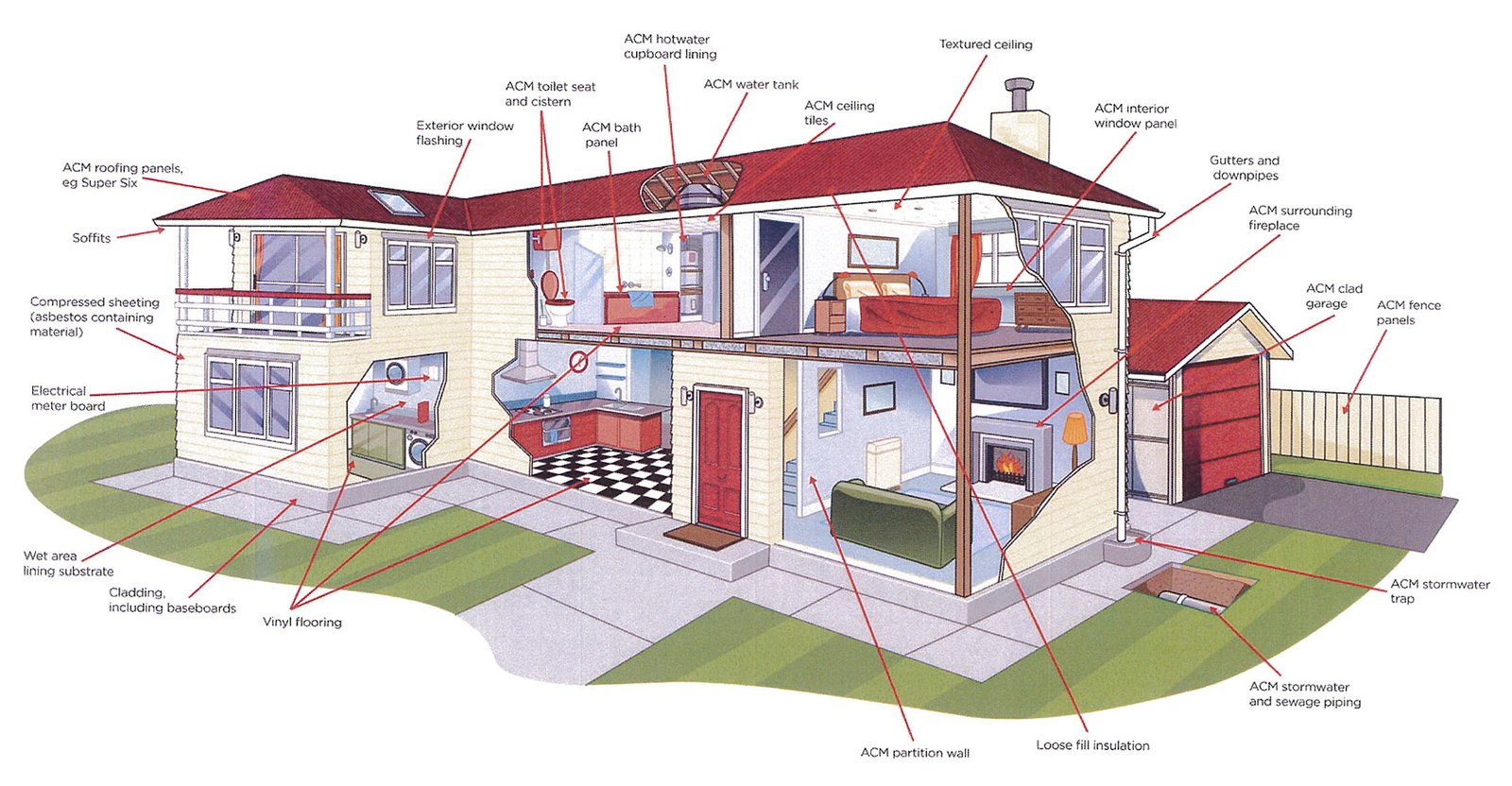
ACM stands for asbestos-containing materials. Buildings constructed before 1990 are likely to contain asbestos materials containing asbestos were commonly used during construction. These materials are not dangerous if they are in a good condition and remain undistributed .

Frequently Asked Questions

Do you have an asbestos related question? It may be one of our Asbestos FAQ’s listed below. If your question is not on the list, please feel free to contact us and our experienced staff will be happy to answer your questions.

Asbestos is a group of naturally occurring silicate minerals that are mined from the ground. Chrysotile, amosite, crocidolite, tremolite, anthophyllite, and actinolite fibers are the most common types of asbestos minerals.

Asbestos was used in building materials in the mid-to-late-20th century, until around the late-1990s, when the health risks associated with asbestos became known. It was a very popular building material because of its desirable properties, such as its strength, flexibility and resistance to heat, fire and friction. However, asbestos is made up of extremely fine fibres, and when airborne, these can be inhaled and become lodged in the lungs, potentially causing severe health issues.

The use of asbestos as a building material ceased after its health risks became known, but it is still present in many buildings today.

Asbestos fibres themselves are not visible to the naked eye, but many materials contain it. Asbestos has been used in many different building materials, making it difficult to identify all potential sources in the home or workplace. The only certain way to identify all sources of asbestos is with thorough sampling, and testing of those samples in a tab.
Asbestos is the leading cause of an aggressive cancer called mesothelioma, Asbestos fibres, when inhaled, can lodge in the lungs and remain there for life. These fibres can cause scarring and inflammation, which can affect breathing, and eventually result in cancer and other chronic conditions like asbestosis. The scarred tissue impairs the ability of the lungs and heart to adequately provide oxygen to the body. This is a serious disease, and can eventually lead to disability or death in people exposed to high amounts of asbestos. Asbestos-related diseases do not appear immediately, but may develop 20 to 50 years after exposure.
If asbestos is undamaged and in good condition, it may not pose an immediate risk to health. It is only when the fibres are released into the air that asbestos poses serious health risks. So most of the time it may not be necessary to have asbestos removed, unless the asbestos is likely to the disturbed through renovation work or demolition. If you are planning to undertake renovation or demolition work on an older building, it’s extremely important that you investigate the presence of asbestos first. If asbestos is present, its safe removal must be carefully planned and carried out, to protect people and the environment. If you’re in any doubt about asbestos being a risk, you should call an asbestos assessor for advice.
An asbestos management plan is required to provide documentation of the recommended asbestos response actions, the location of asbestos within the building, and any action taken to repair or remove the material. The PCBU or person responsible for the property must maintain records to be included in the Asbestos Management Plan.
Scroll to Top